
Key Takeaways
A cancer diagnosis does not come with one reliable timeline. Prognosis depends on the specific cancer, its extent, the dog’s overall health, and what care is appropriate for that individual.
- Survival estimates describe groups of dogs, not a precise deadline for one dog.
- Cancer type, grade, stage, location, and spread can all affect prognosis.
- Tests and treatment discussions can clarify options, benefits, burdens, and uncertainty.
- Appetite, comfort, energy, and the routines your dog still enjoys help show how they are doing.
- Regular conversations with your veterinarian can guide symptom care and difficult decisions.
What dog cancer life expectancy estimates can tell you
Hearing a cancer diagnosis often brings one urgent question: how much time might we have? The phrase dog cancer life expectancy can sound like it points to a single answer, but estimates are best understood as context for a conversation with your veterinarian. A prognosis considers the diagnosis and the dog in front of you, not just a number. The factors that affect survival can help explain why two dogs with cancer may have very different courses.
Why there is no single timeline
Cancer is not one disease with one predictable pattern. Some tumors grow locally, while others can spread or affect the body in different ways; treatment options and a dog’s response also vary. Even with a clear diagnosis, a veterinarian may be able to describe a likely range rather than predict exactly what will happen or when. That uncertainty is difficult, but it does not mean there is nothing useful to know.
How survival statistics are calculated
A survival estimate generally comes from observing a group of dogs with similar diagnoses, sometimes grouped further by factors such as disease extent or treatment. The figure may describe a median, an average, or a proportion alive at a particular point, so it matters what statistic is being reported. A group result cannot tell you which outcome an individual dog will have. When a veterinarian shares a number, ask what population it came from and how closely your dog resembles that group.
A short comparison can make the limits of different estimates easier to see:
| Estimate type | What it can describe | What it cannot predict |
|---|---|---|
| Median survival | The midpoint of outcomes in a defined group | The exact lifespan of one dog |
| Average survival | A group-wide mean that may be affected by unusually short or long outcomes | The most likely course for every dog |
| Survival at a set time | The share of a group alive at a chosen follow-up point | Whether a particular dog will reach that point |
These measures answer different questions, so they should not be treated as interchangeable. Ask your veterinarian which statistic is relevant to your dog and what assumptions sit behind it.
Why an individual dog’s outlook may differ
A dog’s outlook can differ from a published estimate because the diagnosis, general health, response to care, and practical treatment goals are individual. Some details may become clearer only after additional tests or after seeing how the dog feels over time. Your veterinarian can explain which parts of the estimate apply most closely and which are uncertain. It can also help to ask what changes would prompt a reassessment.
How cancer type and stage affect prognosis
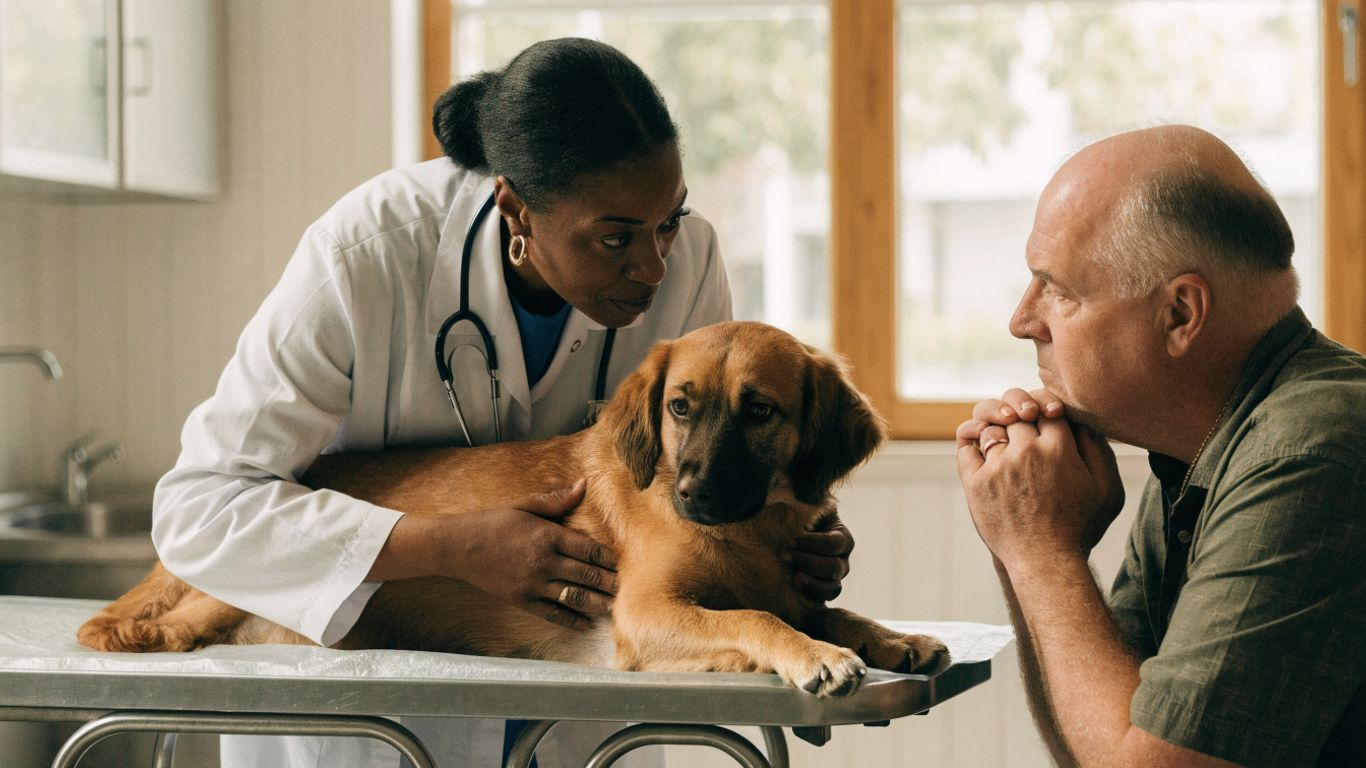
The words “cancer” and “tumor” cover many different conditions, and the name of the cancer is only one part of the picture. Its biological behavior, where it started, and whether it has spread can influence the likely course and the options available. An estimate becomes more useful when it is tied to these specific findings. The visual below reflects the kind of careful, individual assessment these conversations involve.
Differences between cancer types
Different cancers can behave differently, even when they are found in the same part of the body. Some are more localized, while others may involve multiple areas or affect normal body functions in a more direct way. The name of the cancer helps guide what information the veterinary team needs next, but it does not by itself settle the prognosis. A general overview of common canine cancers can help you prepare questions about the diagnosis you have been given.
What tumor grade and stage mean
Grade and stage describe different features. Grade generally refers to how the cancer cells look and behave under examination, while stage describes how extensive the disease is, including whether it has spread. The exact systems and tests used depend on the cancer type. Your veterinarian can explain which findings are confirmed and which remain unknown; a stage should be interpreted in the context of the specific diagnosis rather than as a universal prediction.
How location and spread can change the outlook
A tumor’s location can matter because it may interfere with nearby organs, movement, eating, or other everyday functions. Evidence that cancer has spread can also change what treatment is possible and what a realistic goal might be. Ask whether the main concern is local growth, spread elsewhere, or symptoms caused by the tumor’s position. These distinctions can make a broad prognosis more specific and useful.
How diagnosis and treatment shape the outlook
A diagnosis is built from the information that is available, and additional tests may clarify what kind of cancer is present or how far it has progressed. Treatment is not a single default path: options depend on the findings, the dog’s condition, and what the family hopes to achieve. Some plans aim to control the cancer, while others focus primarily on comfort. A thoughtful discussion can help you understand the possible course without assuming that every available treatment is the right choice.
Tests that help clarify prognosis
Depending on the suspected cancer, a veterinarian may recommend examining a sample of tissue or cells, imaging, blood work, or other tests. Each test answers a different question, and not every dog needs every test. Before proceeding, ask what a test could reveal, how the result could change the care plan, and whether there are meaningful alternatives. Confirming the diagnosis and weighing complications can be part of a broader decision-making process.
Comparing treatment options and goals
Treatment discussions often become clearer when the goal is stated first. Your veterinarian can describe whether a proposed plan is intended to remove or shrink a tumor, slow its progression, manage symptoms, or support comfort. Ask what the likely routine would involve and how success would be assessed. A plan that fits one dog’s diagnosis or family may not suit another, even when the cancer name is similar.
Weighing possible benefits, side effects, and costs
Every option has practical and medical considerations, and the balance may change as new information emerges. It is reasonable to discuss possible benefits alongside side effects, visits, recovery needs, and financial limits. A simple set of questions can keep the conversation focused:
- What is the main goal of this option for my dog?
- What changes might we see if it helps, and how soon might we know?
- Which side effects or complications should prompt a call?
- What is the likely care routine, including follow-up visits?
The answers can help you compare options on more than their theoretical effect on the cancer. You can also ask what comfort-focused care would look like if you decide not to pursue a particular treatment.
How your dog’s health and daily life matter
A prognosis is not only about a tumor or test result. A dog’s existing health, comfort, and ability to enjoy familiar routines also matter when considering what care is worthwhile. What you notice at home can give the veterinary team useful context between appointments. Keeping a calm record of daily changes may make patterns easier to discuss than relying on memory during a stressful visit.

The role of age and other health conditions
Age by itself does not determine whether a dog can tolerate a particular plan. Other health conditions, mobility, and the demands of treatment may be more relevant to an individual decision. Tell your veterinarian about ongoing medications and any changes you have noticed, even if they seem unrelated to the cancer. The aim is to understand the whole dog, not to make a decision based on a single factor.
Changes in appetite, energy, and mobility
A change in eating, drinking, activity, sleep, or movement can affect comfort and may signal that the care plan needs review. These changes do not always mean the cancer is progressing; medication effects and other health problems can also contribute. If feeding is a concern, a dog feeding plan that includes weight and body-condition tracking may help structure a conversation with your veterinarian. Avoid changing calories or treatment based on a general guide alone.
Tracking good days and difficult days
A brief daily note can help you see whether your dog still enjoys familiar activities and whether difficult periods are becoming more frequent. Consider recording comfort, appetite, movement, rest, and any symptoms that concern you. Some families also use a simple rating scale, then bring the notes to veterinary appointments. Quality-of-life guidance can help you think through signs of decline, but your veterinarian can help interpret what you are seeing in your dog.
When symptoms need prompt veterinary attention
New or worsening symptoms deserve attention, though not every change is an emergency. A veterinarian who knows the diagnosis can help distinguish expected changes from signs that need urgent assessment. If you are unsure, it is safer to call and describe what has changed than to wait for the next scheduled visit. Your observations—when a symptom began, how often it occurs, and whether it is worsening—can help the clinic advise you.
Signs that may point to pain or discomfort
Dogs may show discomfort through restlessness, reluctance to move, unusual withdrawal, changes in posture, or less interest in food and familiar activities. Some signs are subtle, and they can overlap with fatigue or other illness. If your dog seems uncomfortable, contact your veterinarian to discuss what you are seeing and what relief may be appropriate. Do not give human medication unless a veterinarian has specifically instructed you to do so.
Changes that could signal a complication
A sudden or marked change in breathing, alertness, ability to stand, bleeding, repeated vomiting, or inability to keep water down warrants prompt veterinary advice. The urgency depends on the symptom and your dog’s condition, so ask your veterinary team in advance which signs require an immediate visit. Guidance about advanced cancer and staging can provide background, but it cannot replace an assessment of a new symptom.
When to contact your veterinarian or an emergency clinic
Call your regular veterinarian when a symptom is new, worsening, or interfering with eating, drinking, rest, or movement. If the clinic is closed and your dog appears severely distressed or rapidly deteriorates, contact an emergency veterinary clinic for instructions. Keep the diagnosis, medications, and recent changes ready to describe. A phone call can help determine whether your dog needs to be seen now or can safely wait for a scheduled appointment.
Planning care and making decisions with your veterinarian
Planning is not about predicting every turn; it is about knowing what matters to your dog and having a next step when circumstances change. A direct conversation with your veterinary team can help you compare likely outcomes, understand comfort options, and decide what to monitor at home. You do not have to make every decision at once, unless your veterinarian explains that a particular issue is urgent. It may help to write down questions before the appointment and bring someone who can take notes.
Questions to ask about likely outcomes
Ask for the most likely course, the best- and worst-case possibilities, and what signs would change the estimate. You can also ask what the treatment plan is expected to accomplish, how your dog’s response will be measured, and when the team would revisit the decision. If the answers feel unclear, ask for plain language or a written summary. When reviewing online resources, remember that editorial publishing workflows describe how content is produced, not whether a specific medical claim applies to your dog; discuss clinical questions with your veterinarian.
Palliative and hospice care options
Palliative care aims to relieve symptoms and support comfort, whether or not cancer-directed treatment is also being used. Hospice care may involve planning for comfort and support as illness advances; the services available vary by veterinary practice and location. Ask which symptoms can be managed, whom to call after hours, and what changes would prompt a new plan. It is also reasonable to discuss how care can adapt if your dog’s needs change.
How to approach quality-of-life and end-of-life decisions
Quality of life is personal, but it can be considered through observable things such as comfort, appetite, mobility, social interest, and the balance of pleasant and difficult days. A written plan with your veterinarian can help you know what changes matter most to your family and when to revisit the conversation. End-of-life decisions are deeply difficult; discussing them before a crisis does not mean giving up, but can help you focus on your dog’s comfort. For a broader perspective, see quality-of-life discussions and planning after diagnosis.
Some practical resources address entirely different subjects: inherited property decisions, teen selling rules, and a weekly horoscope forecast. They do not inform veterinary care or prognosis, so keep medical decisions grounded in advice from your dog’s veterinary team.
Conclusion
There is no single timeline that fits every dog with cancer, but a specific diagnosis, careful attention to daily comfort, and honest conversations with your veterinarian can make the uncertainty more manageable. Focus on the information that will change a decision, keep track of what your dog is experiencing, and revisit the plan as needs evolve.
Frequently Asked Questions
How long can a dog live after a cancer diagnosis?
It depends on the cancer type, its extent, the dog’s health, and the care chosen. A veterinarian can explain the range that best fits the individual diagnosis, but no estimate can predict an exact timeline for one dog.
Does a cancer diagnosis always mean a dog is near the end of life?
No. Cancers differ in behavior and available treatment, and some dogs may continue to have a good quality of life for a time. The specific diagnosis and veterinary assessment are essential to understanding the situation.
What is the difference between cancer grade and stage?
Grade generally describes features of cancer cells, while stage describes how extensive the disease is. The terms and systems vary by cancer type, so ask your veterinarian what the findings mean in your dog’s case.
Can treatment improve a dog’s life expectancy?
Some treatments may control cancer or ease symptoms, but benefits and burdens vary by diagnosis and individual dog. Discuss the treatment goal, possible effects, and alternatives with your veterinarian.
What changes should I track at home?
You might note appetite, comfort, energy, mobility, sleep, and interest in familiar activities. A short daily record can reveal patterns and give your veterinarian useful information during follow-up.
When should I call a veterinarian about new symptoms?
Contact your veterinarian if a symptom is new, worsening, or affecting comfort or normal routines. For severe distress or rapid deterioration, call an emergency veterinary clinic for guidance.
How can I tell whether my dog’s quality of life is declining?
Look for persistent discomfort, loss of interest in enjoyable activities, difficulty with everyday functions, or a growing number of difficult days. Discuss your observations with your veterinarian, who can help assess comfort and possible next steps.





Leave a Reply