
Key Takeaways
A new lump can be unsettling, but its appearance cannot tell you reliably whether it is cancerous. A veterinary examination, and often a cell or tissue sample, is needed for an answer.
- Arrange a veterinary check for any new, changing, or persistent lump.
- Watch for rapid growth, bleeding, pain, discharge, or behavior changes.
- Photograph and measure the lump rather than squeezing or puncturing it.
- Diagnosis may involve aspiration, biopsy, blood tests, or imaging.
- Treatment depends on the tumor type, location, spread, and your dog’s quality of life.
What a cancer lump on a dog may look and feel like
A cancer lump on dog skin may be firm, soft, raised, flat, movable, or fixed beneath the skin. Some grow slowly and attract little attention, while others change noticeably over a short period. Because harmless growths can look much the same, visual inspection is only a starting point.

Common locations for suspicious lumps
Lumps can occur almost anywhere, including the trunk, legs, face, neck, paws, and beneath the abdomen. Mammary tissue, areas around the mouth, and the skin between the toes also deserve attention when a new swelling appears. During a routine dog health check, gently run your hands over the body and note anything new without pressing hard.
Changes in size, shape, color, or texture
A lump that enlarges quickly, becomes harder, changes color, develops an uneven outline, or feels attached to deeper tissue deserves prompt attention. Bleeding, crusting, an open surface, or repeated licking can also signal irritation or a more serious problem. Keep in mind that a change does not prove cancer; it tells you that the lump should be reassessed.
Why appearance alone cannot confirm cancer
A veterinarian cannot reliably identify a tumor’s behavior by touch alone. Fine-needle aspiration or biopsy may be needed to determine what cells are present and whether they are abnormal. A sample provides evidence that appearance and palpation cannot.
This is also why a practical lump assessment guide can help you record observations, but should not replace an examination. Online descriptions are useful for forming questions, not for making a diagnosis.
How benign lumps can resemble malignant tumors
Lipomas may feel soft and mobile, while cysts can form rounded bumps under the skin. Some benign lesions become inflamed, itchy, or temporarily larger, making them appear alarming. Conversely, some malignant tumors remain small and painless at first, so a quiet-looking lump should not automatically be dismissed.
When a dog lump needs prompt veterinary attention
Not every bump is an emergency, but every new or changing lump is worth discussing with a veterinarian. The timing depends on what you observe, how your dog feels, and whether the skin is damaged. If you are unsure, calling the clinic and describing the change is a sensible first step.
Rapid growth or sudden changes
A mass that becomes noticeably larger over days or weeks should be checked promptly. Sudden changes in shape, firmness, or mobility are also useful details to report. Take a dated photograph so the veterinarian can compare the current appearance with what you first noticed.
Bleeding, ulceration, discharge, or persistent itching
An open, bleeding, oozing, or foul-smelling lump needs veterinary attention, especially if your dog keeps licking or scratching it. Repeated irritation can worsen the wound and make sampling more difficult. Do not apply human creams or antiseptics unless a veterinary professional tells you to do so.
Pain, swelling, or changes in your dog’s behavior
Whining, guarding the area, limping, reluctance to be touched, reduced appetite, unusual tiredness, or hiding can indicate discomfort or illness. Swelling around a mass may reflect inflammation, infection, or deeper involvement. A resource on warning signs in dogs can help you organize what you see before contacting your clinic.
Emergency symptoms that require immediate care
Seek urgent veterinary care if the lump is associated with trouble breathing, collapse, severe weakness, uncontrolled bleeding, a rapidly worsening facial or throat swelling, or repeated vomiting. A mass itself may not be the emergency; the dog’s overall condition is what matters most. Keep your dog calm and avoid manipulating the area while arranging help.
Common types of lumps and bumps in dogs
Dogs develop many kinds of skin and subcutaneous growths, from ordinary fatty deposits to tumors that require extensive treatment. Names can be confusing, and two lumps that look alike may have completely different causes. A guide to common dog lumps offers additional background on benign growths, cysts, and other lesions, but diagnosis still belongs with your veterinarian.
Lipomas and other usually benign growths
Lipomas are fatty growths that are often soft and movable, particularly in older dogs. They may remain harmless, although a large or awkwardly placed lipoma can interfere with movement or comfort. Other benign growths include some warts and histiocytomas, but a veterinarian may still recommend sampling a new or changing lesion.
Mast cell tumors and their variable appearance
Mast cell tumors can vary widely in size, firmness, color, and location. Some resemble an ordinary skin tag or insect bite, while others are irritated or swollen. Their appearance is not dependable enough to rule them in or out, so a veterinary sample is commonly needed.
Soft tissue sarcomas and deeper masses
Soft tissue sarcomas may arise beneath the skin and feel like a firm, deep, or poorly defined swelling. They can be slow-growing, yet their position and local invasion may affect treatment planning. A mass that seems fixed or deeper than the surrounding skin deserves careful assessment.
Mammary tumors and lumps near the nipples
Lumps along the mammary chain, including near the nipples, should be examined rather than watched indefinitely. One dog may have a single nodule and another may have several. The veterinarian will assess the entire chain and discuss sampling, surgery, and any recommended staging tests.
Cysts, abscesses, and inflamed skin lesions
Cysts may contain fluid or keratin, while abscesses can be painful, warm, and swollen. Infections often develop more quickly than many tumors and may cause discharge or fever. Even when the cause seems obvious, avoid draining the lesion at home because the contents, pressure, and bacteria can create complications.
How veterinarians diagnose a cancer lump on a dog
Diagnosis usually begins with a hands-on examination and a detailed history. The veterinarian may ask when the lump appeared, whether it changed, and whether your dog has shown pain or other symptoms. Further testing is selected according to the mass’s location, size, texture, and suspected behavior.

What happens during the physical examination
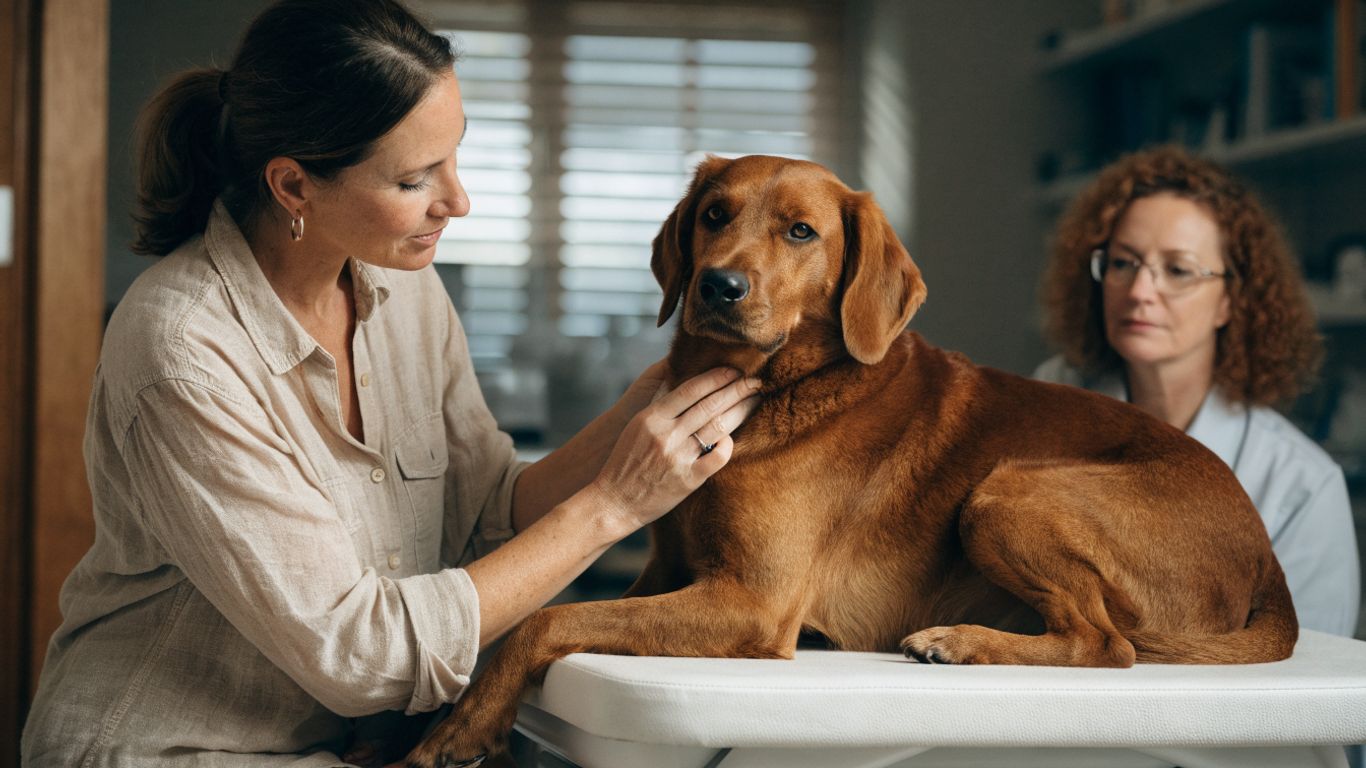
The veterinarian will inspect and feel the lump, measure it, and assess whether it moves with the skin or deeper tissues. Nearby lymph nodes may also be checked, and the rest of the body may be examined for additional growths. Bring your photographs and notes so the visit begins with a clear timeline.
Fine-needle aspiration and cytology
During fine-needle aspiration, a small needle removes cells from the lump for examination under a microscope. It is often quick and may not require a full anesthetic, although results can be limited when the sample contains too few representative cells. A non-diagnostic result does not necessarily mean the lump is harmless.
Biopsy and histopathology
A biopsy removes part or all of a mass for histopathology, which examines tissue architecture and cellular features. This can identify the tumor type and, in some cases, provide information about grade or likely behavior. The result helps guide decisions about margins, additional treatment, and follow-up.
Blood tests and diagnostic imaging
Blood work may assess your dog’s general health before sedation, surgery, or medication. Ultrasound, radiographs, or other imaging can help show how deep a mass is and whether there are concerns elsewhere in the body. The exact tests depend on the suspected diagnosis and the planned treatment.
Why a second opinion may be helpful
A second opinion can be reasonable when the diagnosis is unusual, surgery is complex, or the proposed treatment carries substantial risks. You may ask whether the slides can be reviewed by a specialist or whether referral to a veterinary oncologist is appropriate. A careful review can make the next decision feel more grounded.
What to do after finding a lump on your dog
Try not to panic when you discover a bump. Many are benign, but waiting without recording changes can make it harder to tell whether the lump is stable. Contact your veterinary clinic, explain what you found, and follow its advice about timing.
Measure and photograph the lump at home
Use a ruler beside the lump and take clear photographs in good light, including one wider image showing its location. Repeat the measurement from the same angle if the veterinarian recommends monitoring. This simple record is more useful than relying on memory.
Record its location, texture, and changes
Write down whether the lump is on the skin or beneath it, soft or firm, movable or fixed, and painful to touch. Note when you first noticed it and whether your dog is licking, scratching, limping, eating less, or acting differently. A few consistent observations can give the veterinarian a much better starting point.
A short home record can include:
- The date you first noticed the lump.
- Its approximate length, width, and location.
- Changes in color, firmness, surface, or discharge.
- Your dog’s appetite, energy, comfort, and behavior.
That information should support the appointment, not become a reason to delay it. If the lump changes rapidly or your dog seems unwell, call sooner rather than waiting for another measurement.
Avoid squeezing, puncturing, or treating it yourself
Squeezing can cause pain, bleeding, inflammation, or infection. Puncturing a cyst or suspected tumor may also make the area harder to evaluate. Keep your dog from licking it if possible, and ask the clinic what gentle cleaning or protection is appropriate.
Preparing useful questions for the veterinary visit
Ask what the lump could be, whether sampling is recommended, how soon results may be available, and what changes should prompt a call. You can also ask about sedation, expected costs, treatment alternatives, and whether referral is warranted. If diabetes or another chronic condition is part of your dog’s medical history, bring that information too; guidance on diabetic dog care illustrates why diet, medication, and monitoring should be discussed together rather than separately.
Treatment options for cancerous lumps
Treatment is not one-size-fits-all. The tumor’s type, grade, size, location, and evidence of spread all matter, as do your dog’s age, health, and comfort. Once the diagnosis is clearer, your veterinarian can explain the likely benefits and burdens of each option.
Surgical removal and margin planning
Surgery is often considered when a tumor can be removed safely. The surgeon may plan a margin of normal-looking tissue around the mass because microscopic cells can extend beyond what the eye can see. Location matters: a lump near a joint, paw, face, or vital structure may require a different approach than one on the trunk.
Radiation therapy and chemotherapy
Radiation may be discussed when cancer cells remain in an area that cannot be widely excised or when local control is especially important. Chemotherapy may be used for tumors with a meaningful risk of spread or as part of a broader treatment plan. Veterinary protocols are tailored to the diagnosis and aim to protect daily comfort as much as possible.
Targeted treatment for specific tumor types
Some tumors have biological features that make particular medicines or specialist protocols relevant. These options are not appropriate for every cancer and generally depend on pathology results. Ask what evidence supports the proposed treatment and whether referral is needed.
Monitoring smaller or low-risk masses
In selected cases, active monitoring may be reasonable when a mass is small, stable, and considered low risk. Monitoring should be a deliberate veterinary plan with agreed measurements and review dates, not simply ignoring the lump. If it grows, becomes painful, or changes on the surface, the plan may need to change.
Factors that influence treatment decisions
The decision may involve several competing considerations. A useful discussion usually covers:
| Factor | Why it matters | Question to ask |
|---|---|---|
| Tumor type and grade | Helps estimate behavior and treatment needs | What did the pathology show? |
| Location and size | Affects whether complete removal is feasible | What margins are realistic here? |
| Evidence of spread | May change surgery or medication choices | Is staging recommended? |
| Overall health | Influences anesthesia and recovery | What risks does my dog face? |
| Quality of life | Keeps comfort central to the plan | How will we know treatment is helping? |
No single factor decides the outcome by itself. Your veterinarian can help weigh medical possibilities against the practical realities of recovery, travel, cost, and your dog’s day-to-day comfort.
Supporting your dog through diagnosis and treatment
Dogs often cope best when routines remain predictable and their discomfort is addressed early. Keep notes about eating, drinking, sleep, movement, and mood, since gradual changes can be easy to miss. Your veterinary team can tell you which signs are expected and which require a call.
Managing pain, discomfort, and wound care
Give pain relief exactly as prescribed and never substitute human medication without veterinary approval. Check an incision or affected area as directed for swelling, separation, discharge, or excessive licking. An Elizabethan collar or recovery suit may be frustrating for your dog, but it can protect healing tissue.
Supporting appetite, activity, and recovery
Offer food, water, and rest according to the discharge instructions. Short, calm walks may be appropriate, while jumping and rough play may need to stop temporarily. If appetite falls, vomiting occurs, or your dog seems unusually weak, contact the veterinary team rather than making medication or diet changes on your own.
Understanding prognosis and follow-up visits
Prognosis depends on the tumor type, grade, location, margins, spread, and response to treatment. Follow-up visits may include an incision check, repeat measurements, imaging, or additional sampling. Bring your home notes; they help the veterinarian see how your dog is doing between appointments.
Balancing treatment benefits, risks, and quality of life
A treatment plan should fit both the medical situation and the dog in front of you. Talk openly about pain, mobility, appetite, enjoyment, and the likely demands of treatment. Support can also include practical preparation, such as arranging transport and a quiet recovery space; even unrelated planning resources like long-distance moving advice underline how much smoother stressful logistics become when organized early.
Information from a local SEO guide or island photography service belongs to a different subject, but the broader lesson is familiar: clear planning and reliable records make complicated processes easier to navigate. For a dog with a suspected tumor, that means keeping veterinary instructions, test results, medication details, and questions together.
Conclusion
Finding a lump does not tell you that your dog has cancer, but it does give you a reason to pay attention. Photograph it, record changes, avoid home treatment, and arrange veterinary advice—especially when it grows quickly, bleeds, hurts, or affects behavior. A timely diagnosis gives you clearer choices and keeps your dog’s comfort at the center of whatever comes next.
Frequently Asked Questions
Does every lump on a dog mean cancer?
No. Lipomas, cysts, infections, and other benign growths are common, but appearance alone cannot reliably distinguish them from malignant tumors. A veterinarian may recommend sampling to know what a lump is.
How quickly should a new dog lump be checked?
Contact your veterinary clinic when you notice a new lump and follow its advice. Arrange more prompt care if it grows rapidly, bleeds, becomes painful, or is accompanied by appetite loss, weakness, or behavior changes.
Can a veterinarian diagnose a lump by feeling it?
Palpation can provide useful clues about size, depth, firmness, and mobility, but it usually cannot confirm the tumor type. Fine-needle aspiration, biopsy, or other testing may be needed.
Should I squeeze a lump on my dog?
No. Squeezing or puncturing it can cause pain, bleeding, inflammation, or infection and may interfere with later evaluation. Ask your veterinarian how to protect the area while you wait.
What should I bring to a veterinary appointment?
Bring dated photographs, measurements, the date you first noticed the lump, and notes about changes in texture or behavior. A list of medications and relevant medical history is also helpful.
Are cancerous lumps in dogs always painful?
No. Some cancerous growths are painless, particularly early on. Pain, licking, swelling, or sensitivity are important warning signs, but the absence of discomfort does not rule out a serious problem.
What determines treatment for a cancerous lump?
Treatment depends on the tumor type, grade, size, location, margins, evidence of spread, and your dog’s overall health. Your veterinarian may discuss surgery, radiation, chemotherapy, targeted treatment, monitoring, or referral to a specialist.



Leave a Reply