
Key Takeaways
No routine can guarantee that a dog will never develop cancer, but thoughtful care can support overall health and help you notice changes sooner.
- Ask your veterinarian how your dog’s breed, age, and history affect individual risks.
- Choose balanced food and portions that help maintain a healthy body weight.
- Reduce avoidable exposures, including excessive sun and tobacco smoke.
- Keep up with veterinary exams and bring new or changing symptoms to your veterinarian promptly.
- Make decisions about spaying or neutering with your dog’s individual needs in mind.
Understand what can—and cannot—be prevented
Preventing cancer in dogs is best understood as lowering some avoidable risks and staying alert to changes, not following a foolproof formula. Cancer is a broad group of diseases, and different types can have different causes. Your dog’s age, breed, health history, and environment all matter, so a veterinarian can help put general advice into context.
How genetics, breed, and age affect risk
Some dogs may be more prone to particular cancers because of inherited traits, while age can also affect the likelihood of developing disease. Breed-related patterns are useful context, but they do not predict with certainty what will happen to an individual dog. A canine cancer overview can introduce topics such as genetics and environmental exposures; use it as background for questions rather than as a diagnosis.
A few broad factors can help frame a conversation with your veterinarian:
| Factor | Why it may matter | Helpful next step |
|---|---|---|
| Age | Health risks can change over a dog’s lifetime. | Ask whether exam frequency should change. |
| Breed and family history | Some patterns may be more common in certain dogs. | Share known family or breed history. |
| Existing health conditions | Other diagnoses may affect care choices. | Bring an updated health and medication list. |
These are prompts for an individualized discussion, not a way to calculate your dog’s personal odds. Your veterinarian can explain which details are meaningful for your dog and whether they change the care plan.
Why prevention can lower risk but cannot guarantee a cancer-free life
Healthy routines can support a dog’s general well-being, but they cannot control every biological factor involved in cancer. Even dogs with attentive care may become ill, and a diagnosis is not proof that an owner did something wrong. Resources on ways to minimize cancer risk likewise emphasize that practical steps do not guarantee prevention.
It helps to think in terms of reasonable risk reduction: choose sound everyday care, avoid exposures you can readily limit, and seek advice when something changes. That approach leaves room for uncertainty without giving up on useful habits.
Which prevention claims deserve a closer look
Be cautious of promises that a particular food, supplement, or routine will prevent cancer. Evidence and recommendations vary, and online advice may not account for a dog’s age, conditions, or medications. Ask what supports a claim, whether it applies to your dog, and whether a change could carry risks of its own.
Search results can also mix veterinary topics with unrelated material, such as moving costs and routes, AI answer-engine audits, or advice on ethical SEO practices. Those pages are not veterinary evidence, so look for qualified animal-health guidance when weighing a cancer-prevention claim.
Support a healthy weight with balanced nutrition
Food is one part of daily care, and a suitable diet can help support a dog’s overall health and maintain a healthy weight. There is no single menu that is right for every dog, and a diet should not be treated as a cancer cure. Focus on complete nutrition, sensible portions, and advice that reflects your dog’s age and health.

Choose a complete, age-appropriate dog food
A complete food appropriate for your dog’s life stage is a practical starting point. Needs can differ among puppies, adults, and older dogs, and health conditions may affect what is suitable. If you are considering special ingredients, remember that a list of foods described as healthful does not establish that they prevent cancer; a review of dog-safe foods is a starting point for discussion, not a substitute for individualized guidance.
Keep treats and portions in check
Portion size can be easy to overlook when treats, training rewards, and table scraps add up throughout the day. Your veterinarian can help you assess body condition and decide whether your dog’s current portions make sense. Steady weight management is generally more useful than sudden restriction or a dramatic change in feeding.
Try keeping a simple record for a week: note meals, treats, and who in the household feeds them. That can make patterns easier to spot and helps turn a vague concern about portions into a practical conversation at the next visit.
Ask your veterinarian before making major diet changes
A sudden switch or restrictive diet may not meet your dog’s needs, particularly if your dog has a medical condition or takes medication. Before adding supplements or changing the main food, ask your veterinarian what the change is meant to achieve and how to tell whether it is appropriate. A plan based on your dog’s health is safer than one built around a broad online promise.
Reduce exposure to potential cancer risks
Some exposures are easier to limit than others, and not every suspected risk is fully understood. Still, sensible precautions at home and outdoors can reduce contact with potential hazards without turning ordinary life into a source of constant worry. Consider your dog’s habits, the products used in your home, and your veterinarian’s advice.
Protect your dog from excessive sun exposure
Dogs with thin or light-colored coats, or areas of exposed skin, may need extra care in strong sun. Offer shade and water, and plan outdoor time with the weather in mind. Ask your veterinarian before using sunscreen or other products on your dog, since products made for people may not be suitable for pets.
Keep tobacco smoke and hazardous chemicals away
Avoid smoking around your dog and keep household chemicals stored where pets cannot reach them. If a product is spilled or your dog may have swallowed or contacted something hazardous, follow its label instructions and contact a veterinarian or an animal poison resource for guidance. A page on reducing risks to pets also discusses tobacco smoke and other practical precautions.
Follow safe practices around pesticides and household products
Read and follow product labels, keep pets away from treated areas for the stated period, and store pesticides and cleaners securely. For flea and tick prevention, use products only as directed and check with your veterinarian about what is suitable for your dog. Local information on flea and tick control can help explain treatment options, but product choices should still take your pet’s needs into account.
A few consistent habits can make these precautions manageable:
- Keep chemicals and pest-control products in closed, pet-inaccessible storage.
- Follow label directions for application and re-entry times.
- Prevent your dog from licking treated surfaces or containers.
- Ask your veterinarian before combining pest-control products.
These steps are meant to reduce avoidable contact, not to suggest that every household product causes cancer. When you are unsure about a specific exposure, get advice based on the product and your dog’s circumstances.
Make preventive veterinary care part of the routine
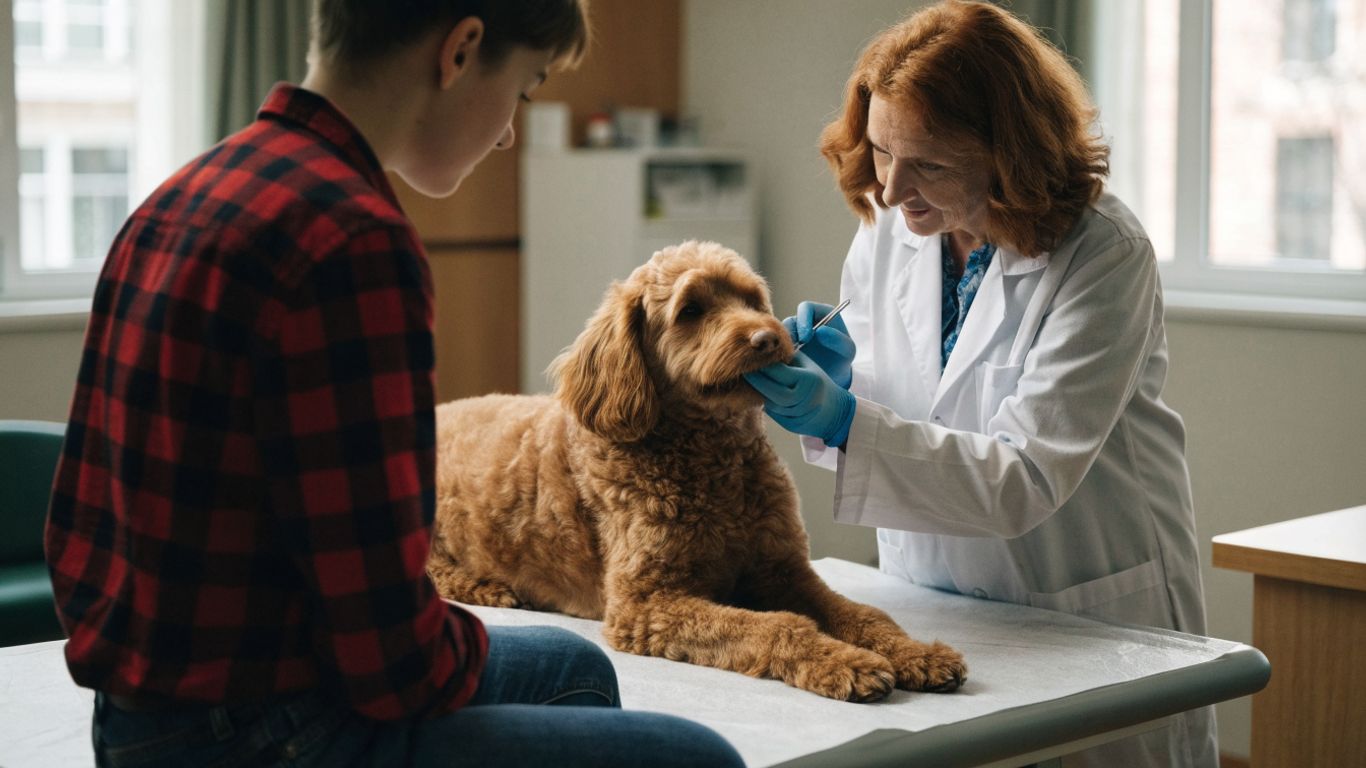
Veterinary visits create opportunities to review your dog’s health over time and discuss concerns before they become harder to interpret. The right schedule can depend on age, prior conditions, and current symptoms. Regular care does not prevent every cancer, but it gives you a professional partner in deciding what deserves attention.

Schedule regular exams based on your dog’s age and health
Ask your veterinarian how often your dog should have a routine exam, and whether the schedule should change as your dog ages or develops new health needs. A visit can also be a chance to review medications, appetite, activity, and any changes you have noticed at home. If your dog finds appointments stressful, ask the clinic about ways to make visits more comfortable.
Discuss screenings based on risk, symptoms, and history
Screening is not identical for every dog, and more testing is not automatically better. Your veterinarian can explain whether a test is appropriate based on your dog’s history, exam findings, and signs you have observed. Ask what a result could tell you, what the next step would be, and whether the test has limitations.
Share changes in lumps, appetite, energy, or behavior promptly
Let your veterinarian know about a new lump or a change in one that is already present, as well as persistent shifts in appetite, energy, or behavior. A symptom does not automatically mean cancer, but a clear description helps the veterinarian decide what should happen next. Notes or photos can make it easier to track changes between visits.
A calm, regular check at home can help you notice what is new; a nose-to-tail check guide offers ideas for making that routine familiar. If you find something concerning, share it with your veterinarian rather than trying to identify it yourself.
Make individualized decisions about reproductive health
Spaying and neutering are health decisions with benefits and trade-offs, and timing can matter. The right choice may depend on your dog’s breed, size, age, health, and circumstances. Rather than relying on a universal rule, use a veterinary conversation to understand the options for your particular dog.
Weigh the benefits and trade-offs of spaying or neutering
Reproductive-health decisions can affect more than one aspect of care, and potential effects vary. Ask your veterinarian to explain the relevant benefits and risks for your dog, including what is known about cancer-related considerations. A discussion should leave room for your priorities and for uncertainties in the available evidence.
Consider breed, size, age, and health history
The details of your dog’s history can change how a recommendation applies. Share your dog’s age, breed or expected adult size, existing conditions, and any family history you know. If you have read conflicting advice about timing, ask which parts are relevant to your dog and which are based on different populations or circumstances.
Ask your veterinarian about timing and alternatives
There may be more than one reasonable approach, and timing is best considered with a veterinarian who knows your dog. Ask what options are available, what signs or changes to watch for, and when you should revisit the decision. A practical conversation is more useful than treating any single timing recommendation as right for every dog.
Build everyday habits that support long-term health
Long-term health is supported by ordinary routines repeated over time, not by a single special intervention. Exercise, preventive care, and noticing changes can all help you respond thoughtfully to your dog’s needs. Keep the plan realistic for your household and adjust it when your dog’s health or abilities change.
Provide regular exercise suited to your dog
Choose activity that fits your dog’s age, fitness, and comfort, and build up gradually if you are changing the routine. A dog that moves stiffly or tires unusually may need an examination before you ask for more exercise. For dogs with mobility concerns, ask about suitable support; information on non-invasive arthritis care describes options that may be discussed with a veterinarian.
Regular movement should feel sustainable rather than forced. Your veterinarian can help adjust activity if your dog has pain, a chronic condition, or a recent change in stamina.
Keep vaccinations and parasite prevention current
Follow your veterinarian’s recommendations for vaccinations and parasite prevention, which can vary with health, lifestyle, and local exposure. Keep a record of products and dates, and ask before changing or combining treatments. If you are unsure whether a dose is due, a quick check with the clinic is better than guessing.
Track health changes and bring questions to checkups
A short note on appetite, energy, mobility, or new physical changes can help you describe patterns accurately at a visit. You do not need to monitor every detail every day; simply record a concern when it appears and note whether it persists or changes. Bringing questions in writing can make a checkup feel more focused and help ensure you leave with a clear next step.
Conclusion
No approach can promise a cancer-free life for a dog, but balanced daily care and a steady relationship with your veterinarian can help you make informed choices and respond to changes sooner. Focus on practical steps that fit your dog, and ask for guidance whenever a decision or symptom leaves you uncertain.
Frequently Asked Questions
Can cancer in dogs be prevented?
No method can guarantee that a dog will not develop cancer. Some practical steps may reduce avoidable risks and support general health, while regular veterinary care can help you discuss concerns and changes.
Does a healthy diet prevent cancer in dogs?
A complete, appropriate diet supports overall health, but no ordinary food should be treated as a proven cancer-prevention method. Ask your veterinarian before making major changes or adding supplements.
Does keeping a dog at a healthy weight matter?
Maintaining a healthy weight is a useful part of general care. Your veterinarian can help assess your dog’s body condition and recommend a feeding and activity plan suited to individual needs.
What changes should I tell my veterinarian about?
Report a new or changing lump, persistent appetite changes, reduced energy, or unusual behavior. These signs can have many causes, so a veterinarian should assess them rather than relying on appearance alone.
Should I check my dog for lumps at home?
It can be helpful to become familiar with your dog’s usual body and notice changes during ordinary grooming or handling. Contact your veterinarian about anything new or concerning rather than trying to diagnose it yourself.
Does spaying or neutering affect cancer risk?
Reproductive-health decisions can involve benefits and trade-offs, and the considerations may differ among dogs. Ask your veterinarian to discuss timing and options in light of your dog’s breed, size, age, and health history.
How often should my dog have a veterinary exam?
The appropriate schedule depends on your dog’s age, health, and symptoms. Ask your veterinarian how often exams are recommended and whether your dog’s needs call for a different schedule.




Leave a Reply